WHERE?
New business possibilities
Where is the new opportunity?
Which business constraints has AI removed? Can services that were once too costly to offer become new products, services or business models?


 知所為
中文中文
Contact
KAYSEN 知所為/AI Judgment
在 AI 时代,作出更好的决策。
AI capabilities keep moving. What matters is seeing which opportunities are worth taking, which investments are worth sustaining, which plans to drop, and which judgments must stay in your own hands.
From model capability to enterprise capability.

The Gap · Capability vs. Value
Every release brings new benchmarks, demos and calls to act. But a model that tops a leaderboard is not necessarily right for your business, and plugging it into a product does not mean the service gets better.
Performance≠Fit
Model metrics matter only once tested against real users, real tasks and real cost constraints.
Launch≠Value
A feature that works is not the same as a better customer experience or better business results.
Efficiency≠Capability
Tools can be bought. Defining the problem, validating results and learning over time have to stay inside the organisation.
Deloitte China × The University of Hong Kong, survey of 205 senior executives on enterprise AI adoption · September 2026
You can borrow input from research, advisers and vendors. You cannot outsource judgment. It has to live in your own leadership team, alongside the accountability.
Irene Du · Founder, KAYSEN
Our Perspective · AI Judgment
AI judgment is the ability to spot new business possibilities as technology shifts, understand the real constraints, make trade-offs of resources and accountability, and let actual results correct the next decision.
Judgment about AI
What to invest in, adopt or drop, and who is accountable for the outcome.
Judgment within AI
Which facts and methods a system relies on when it advises, when it may act on its own, and when it must hand back to a person.
Benchmarks show potential.
Practice reveals consequences.

In the boardroom, AI judgment comes down to four questions that have to be answered together. Our workshops and briefings keep returning to them.
WHERE?
Where is the new opportunity?
Which business constraints has AI removed? Can services that were once too costly to offer become new products, services or business models?
WHY?
Why is it worth our investment?
Among many technical paths, which deserve funding? What should we build, what should we buy, and what should we not do at all?

SO WHAT?
Have the results actually changed?
Every department is launching AI and local efficiency is rising. How does that become company-wide performance that shows up in the financial statements?

AND THEN?
What capability stays with the company?
Technology keeps changing. When a project ends, which judgments, data, people and ways of working must remain in your own hands?

Why KAYSEN · Four Positions, One Perspective
The same AI investment looks different from each seat: different constraints, different interests, different definitions of success.
Saw many companies up close: which lessons transfer, and which depend on a company’s own conditions.
Turned models and algorithms into technology products that enterprises would buy and that could be delivered reliably.
Accountable for user value, growth and ROI: the real test of whether AI investment pays.
Decided which capabilities the group builds once, shares across businesses and keeps for the long term.
We understand why each side acts as it does, and where each falls short.
KAYSEN is not tied to any one party’s goals.
I have always had my product managers test the models themselves, read the logs and label the data. Benchmarks and press releases only tell you what might be possible. Whether a technology is worth using depends on what it brings, and what it costs, once it runs inside the real business.
Irene Du · Founder, KAYSEN

Selected Decisions · The Value Shift
Two decisions from Irene’s time in industry
Field Note / Wealth Management
We did not stop at a chat interface. Several agents working together turned judgment that used to sit with research, asset-allocation and product specialists into a reusable capability serving both clients and advisers. Service quality and scale were no longer a trade-off.
Field Note / Content Growth
Once AI sped up content production, distribution and growth did not follow on their own. Instead of letting each role use AI to work faster, we rebuilt five related functions, from content and review to translation, distribution and growth, around an AI-native workflow.

The Trade-offs
New customer products, shared AI foundations and internal transformation all compete for the same money, people and management attention.
Practice / Group-level AI build-out during Irene’s time in industry
At the time we chose not to build a do-everything agent platform or train our own vertical model; neither was where the company’s advantage lay. Resources went to the foundations every business shared: model access, evaluation, data and knowledge bases.
Observation / From both the buying and the supplying side
Vendors learn from every project, and the enterprise has to learn too. Ownership of problem definition, priorities, evaluation and iteration does not transfer with a purchase.
Ways to Work with KAYSEN
01
Executive Briefings
For executive education programmes, business schools, study missions and delegations visiting China, industry associations and leadership events
First-hand lessons from China’s fintech and internet platforms: what happened once AI entered real operations, which product judgments were overturned along the way, and what transfers to other markets and organisations.
02
Executive AI Judgment Workshop
For leadership teams and executive-education cohorts
Real AI business and technology decisions, brought into the room. Participants choose under incomplete information and explain why, then compare their reasoning with the actual conditions, trade-offs and consequences. The aim is not to memorise an answer but to keep the judgment inside the leadership team.
03
Selective Advisory & Assessment
For well-defined questions on enterprise AI strategy, product commercialisation or early-stage AI projects, scoped project by project. Always on the enterprise’s side: no models to sell, no tools to sell, no implementation.
Decision Exercise / Pick Two
A decision simulation from the workshop, adapted from a real decision
You own the group’s AI investment. Each of the four directions has a case, but budget and people are enough to do only two of them well.
Which two do you pick?
In what order? And what do you deliberately put on hold?
The real conditions, choices and consequences are what we compare in the workshop.
Bring your choice to a conversationThe Experience
Make the call and explain it before you know the outcome. Then we reconstruct the conditions at the time, the choice actually made and what followed, and test whether your reasoning still holds once conditions change.
What You Take Away
Every decision is broken into four elements: the business problem, the key conditions, the reasons for the choice and the actual consequences. Teams leave able to state goals, conditions and reasons clearly, and to know what to test next.
Format
Talk · Case discussion · Decision simulation
60 MIN / 90 MIN / HALF DAY
Beyond the standard content, cases can be matched to your industry and roles, or focused on a specific business line.
From the Field
From major technology conferences and product launches to university classrooms in Hong Kong: first-hand decisions, explained for very different audiences.
Prudential Global AI Day at Cyberport20 November 2026 · Keynote: Putting AI Agents to Work
The University of Hong Kong · City University of Hong KongEnterprise AI decisions in practice
An online sales organisationHalf-day workshop for the core AI team
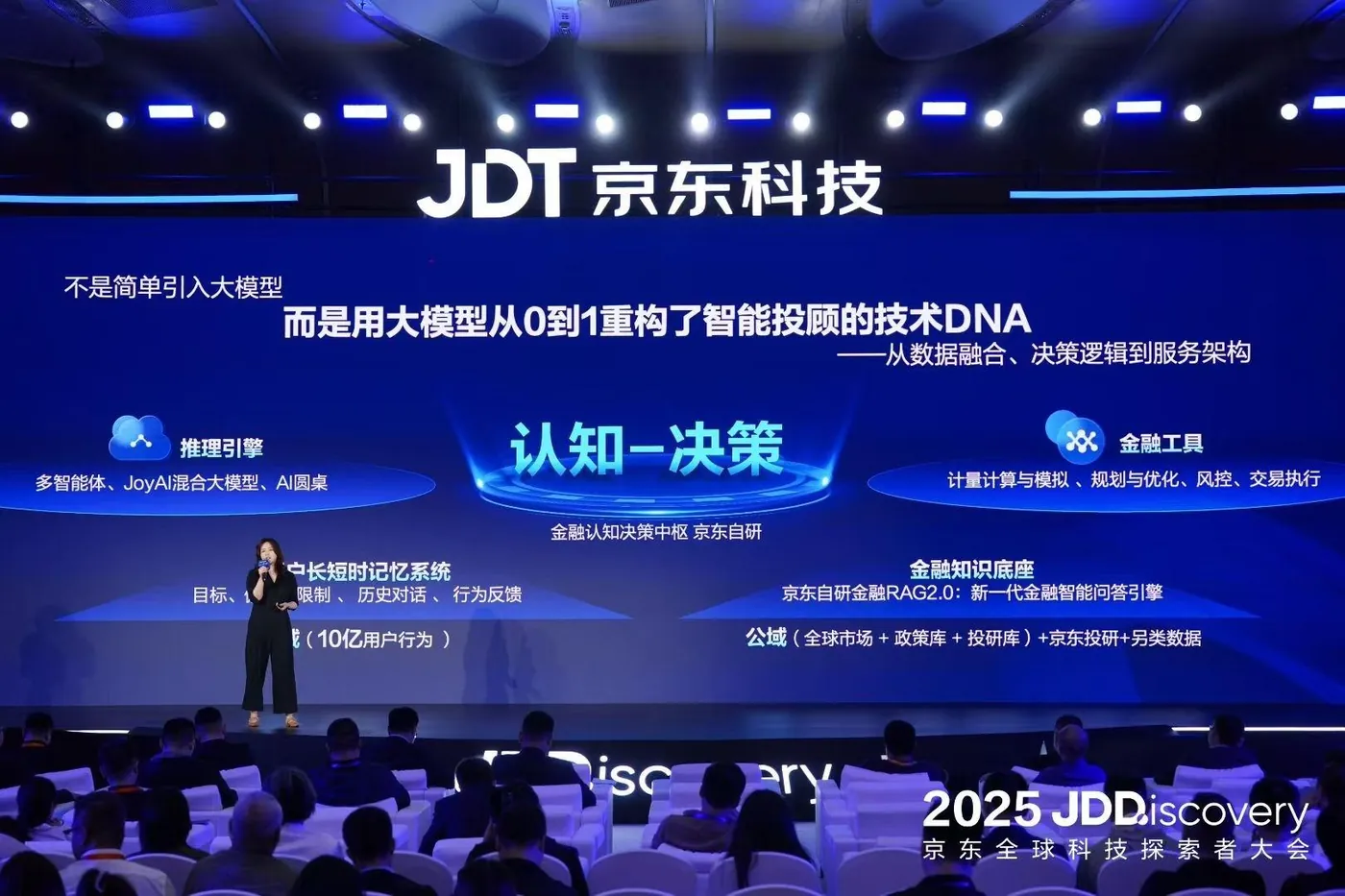
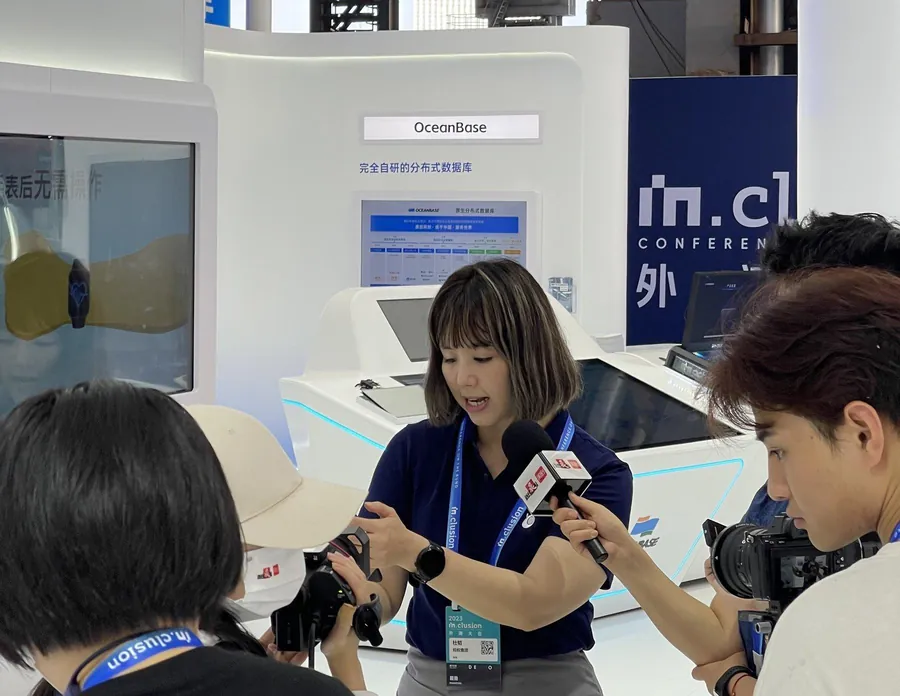
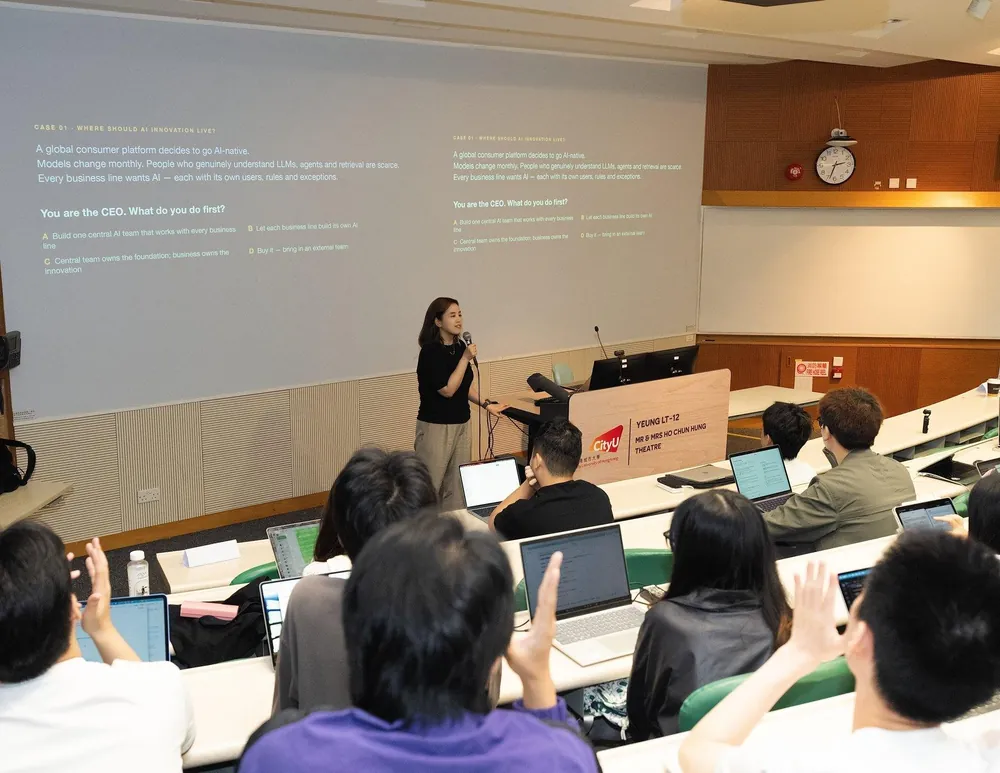
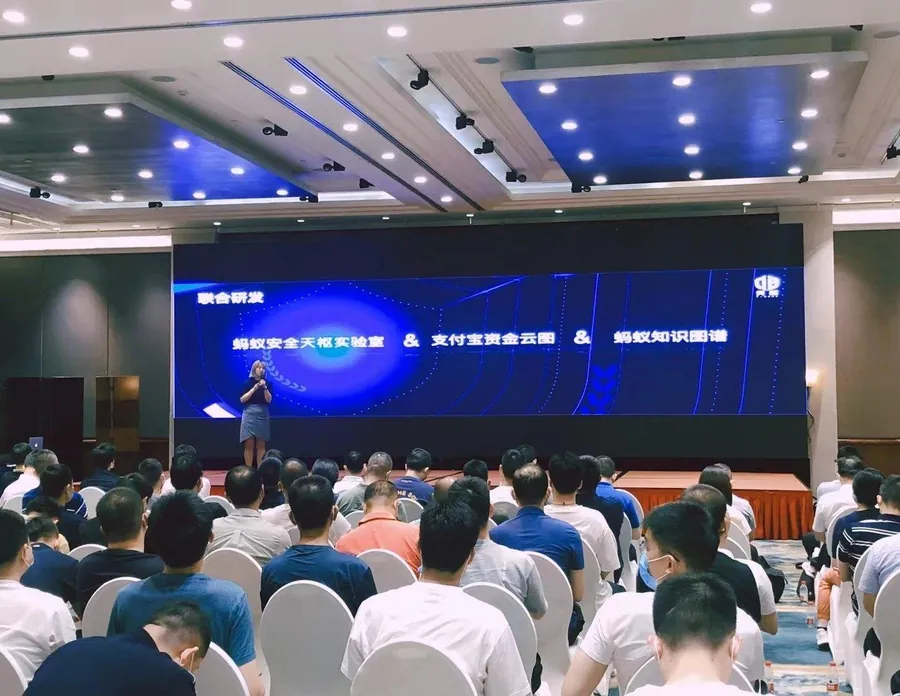
Apart from the Hong Kong university talk, all are public events from Irene’s time in industry.
Field Notes
When the right product decision makes a team harder to see, incentives start shaping the architecture.
Substack · September 2026
Mass experimentation builds skills and surfaces what works. Leaders should measure what they have learned, not how fast they are moving.
Substack · September 2026
People Behind the Practice
First-hand practice plus complementary expertise, working toward one goal: better judgment in the leadership team.

Founder · AI strategy and business innovation
17 years across management consulting, fintech and internet platforms. Starts from business goals to judge AI product opportunities, investment trade-offs and long-term capability.

Chief Technology Adviser · LLMs and agent engineering
17 years in AI, spanning LLM training and post-training, AI data platforms, and agent architecture and evaluation. Led AI at scale in search, marketing, customer service, payment risk and wealth management.

Chief Business Officer · Business development and partnerships
Brings VC and PE investing and several AI ventures, combining an investor’s view with a builder’s to drive business development and partnerships in AI.
KAYSEN is founder-led and works with independent professionals in complementary fields, project by project.


Invitation
So that your next AI decision rests on your own judgment.
We start by understanding the participants and the questions that matter to them, then choose the right format together: a briefing, a leadership workshop or a focused engagement.
Free intro call · phone or video
Or reach us through the KAYSEN partner who introduced us
Leadership teams · Executive education · Study missions · Professional bodies